
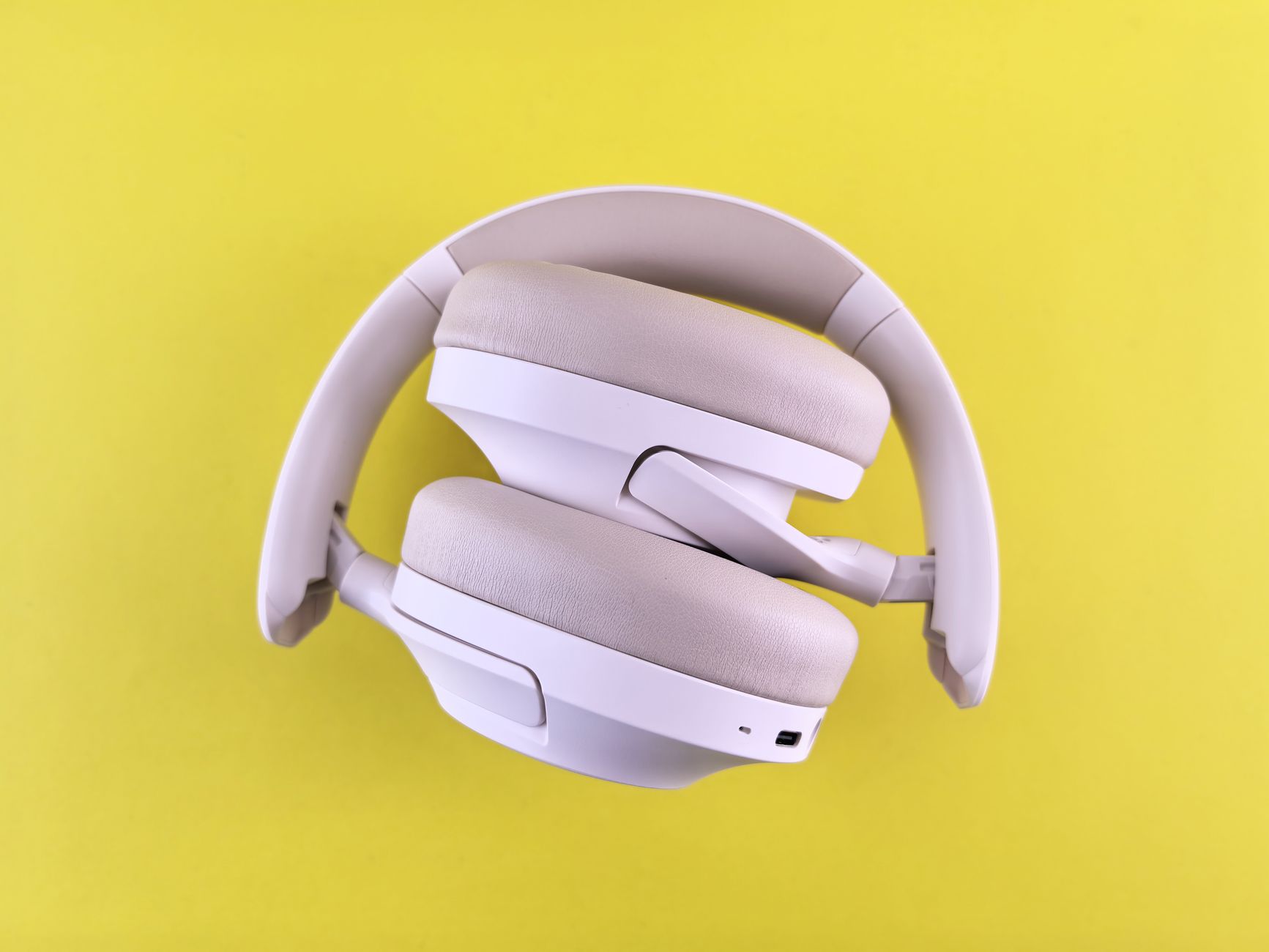

Over-ear noise-canceling headphones are full-size headphones that cover your ears and use active noise cancellation (ANC) to reduce steady low-frequency sounds like engine rumble, fans, or air conditioning, while passive isolation blocks some higher-frequency noise. They can make travel, open offices, and noisy rooms quieter, but they do not eliminate all sound, and fit, comfort, battery life, and sound quality still matter.
Key takeaways
- ANC is typically most effective against steady, low-frequency noise such as airplane engines, road noise, and hums.
- Passive isolation from earcups and fit still matters for voices, clatter, and other higher-frequency sounds.
- Comfort and clamp force often decide whether you can wear over-ear headphones for long sessions.
- Battery life, wired listening, app controls, and multipoint pairing can matter more than ANC alone.
- ANC can create a slight pressure sensation, and it should not replace situational awareness in unsafe settings.
How active noise cancellation works
Active noise cancellation is designed to reduce unwanted background sound. In general, ANC headphones use microphones to pick up ambient noise and electronics to produce a complementary signal. The goal is for the outside noise and the added signal to cancel each other out, especially for continuous low-frequency sounds.
This is different from passive noise isolation. Passive isolation comes from the physical design: over-ear earcups, cushioning, and a secure seal can block some sound simply by covering the ear. A good seal can improve both passive isolation and ANC performance.
Because ANC works best on steady sounds, it may quiet an airplane cabin or a fan more noticeably than a nearby conversation, a baby crying, or sudden clatter.
Essential concepts in over-ear ANC headphones
Active vs. passive noise cancellation
Active noise cancellation uses powered electronics. Passive noise isolation uses materials and fit. Most over-ear noise-canceling headphones combine both.
Feedforward, feedback, and hybrid ANC
Different headphones may use different microphone placements. Feedforward systems sample outside noise, feedback systems sample inside the earcup, and hybrid systems use both approaches. The practical result depends on tuning, fit, and the device.
Transparency mode
Many ANC headphones include a transparency or ambient mode that lets outside sound in through the microphones. This can be useful when you need to hear announcements, traffic, or a colleague without removing the headphones.
Codecs and connectivity
Bluetooth headphones may support different codecs, but codec support alone does not guarantee better sound. Multipoint pairing, wired options, and low-latency modes can be more important for daily use.
Battery and ANC
ANC usually uses battery power, so turning it on can reduce runtime compared with passive listening. Some headphones allow wired listening without ANC, but features vary by model.
Decision factors that matter most
Use this table to compare over-ear noise-canceling headphones without relying on marketing labels alone.
| Factor | Why it matters | What to check |
|---|---|---|
| Fit and comfort | Over-ear headphones sit on or around the ears for long periods. | Earcup size, cushion depth, clamp force, weight, and headband padding. |
| ANC strength | Different models reduce different noise types to different degrees. | How well they handle low-frequency rumble versus voices and office noise. |
| Passive isolation | A good seal can improve quiet without extra battery use. | Earcup design, cushion material, and how well the headphones seal around your head. |
| Sound quality | ANC can change tuning, and some listeners prefer ANC off for critical listening. | Overall balance, bass response, clarity, and whether sound changes when ANC is on. |
| Battery life | Long trips and workdays may require many hours of use. | Runtime with ANC on, charging speed, and whether wired listening works without power. |
| Controls and app | Everyday adjustments should be quick and predictable. | Physical buttons versus touch controls, app EQ, ANC levels, and firmware updates. |
| Connectivity | Switching between phone and laptop can be a daily task. | Multipoint Bluetooth, wired input, USB audio, and low-latency modes. |
| Calls and microphones | Headphones are often used for meetings and phone calls. | Microphone clarity in quiet and noisy places, sidetone, and mute controls. |
| Travel and storage | Portability affects whether you carry them regularly. | Foldability, case size, weight, and durability of hinges. |
Practical examples by use case
Air travel and long commutes
For airplane or train noise, ANC can be most useful because engines and movement create steady low-frequency sound. Over-ear models can also provide passive isolation, but comfort and battery life matter over long trips.
Open offices and shared homes
ANC may reduce HVAC hum and distant road noise, but it is less predictable for speech. If voices are the main distraction, passive isolation, fit, and sometimes playing masking audio can matter as much as ANC.
Studying and focused work
For studying, a comfortable fit and stable Bluetooth connection may be more important than maximum ANC. Some people prefer lighter ANC to avoid a pressure sensation, while others want the strongest quiet mode.
Home listening and gaming
If you listen at a desk, wired connectivity or low-latency wireless can reduce delay for video and games. ANC may be secondary unless your room has steady background noise.
Travel with awareness needs
In settings where you need to hear traffic, announcements, or safety signals, transparency mode or removing the headphones may be safer. ANC is a convenience feature, not a replacement for situational awareness.
Limitations and trade-offs
- ANC is generally better at steady low-frequency noise than sudden or speech-heavy sounds.
- The seal matters. Glasses, hair, ear shape, and cushion wear can reduce performance.
- Some users notice a pressure or suction feeling when ANC is active.
- ANC can alter sound quality, and not everyone prefers the effect.
- Battery life drops when ANC and wireless features are used.
- Microphones can pick up wind noise outdoors.
- Noise cancellation does not protect hearing from all loud sounds, and it should not be used as hearing protection unless the product is explicitly rated for that purpose.
FAQ
Are over-ear noise-canceling headphones better than earbuds?
It depends on fit and use case. Over-ear models can offer larger earcups and more passive isolation, while earbuds can be more portable. The best choice is the one that seals well, feels comfortable, and fits your listening habits.
Do noise-canceling headphones block all noise?
No. They reduce some noise, especially steady low-frequency sound. Higher-frequency sounds like voices, alarms, and clatter may still be audible.
Does ANC affect sound quality?
It can. Some listeners notice changes in bass, treble, or perceived clarity when ANC is on. Many headphones include an ANC-off or transparency mode for comparison.
Can I use ANC without playing music?
Many models allow ANC without audio, but behavior varies. Check whether the headphones stay powered on and whether ANC can work in wired mode without battery.
Are over-ear ANC headphones good for calls?
They can be, but call quality depends on microphone design and noise processing. For frequent meetings, look for clear microphone performance and easy mute controls.
How can I improve noise cancellation?
Get a good seal, adjust the headband and earcups, keep cushions clean and in good condition, and use the correct ANC mode for the environment. Firmware updates from the manufacturer may also change performance.
What should I prioritize if I wear headphones all day?
Comfort first, then battery life, connectivity, and controls. Strong ANC is useful, but it is less helpful if the headphones become uncomfortable or annoying to operate.