
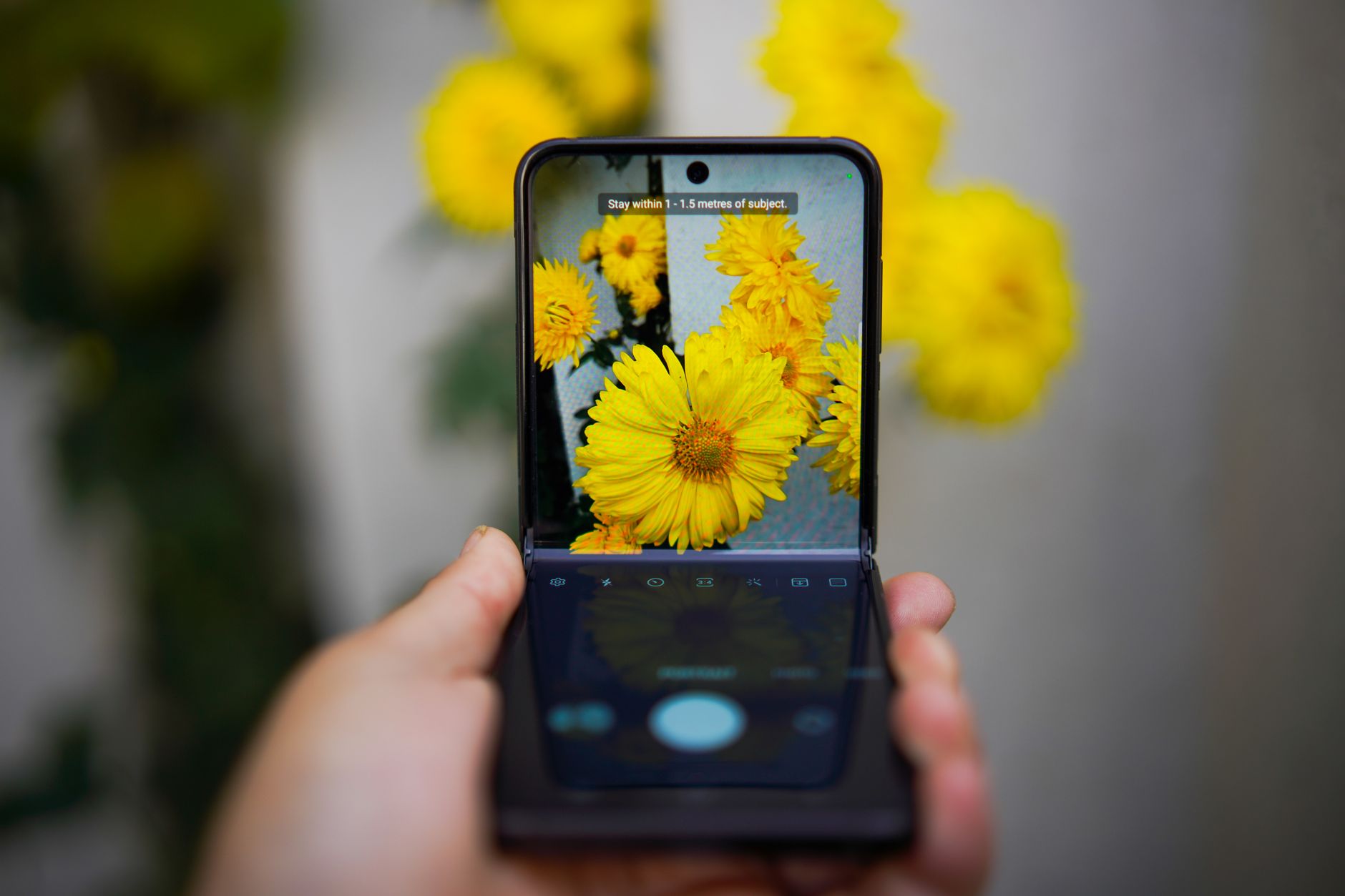

Direct answer: A foldable smartphone works by combining a flexible display, a hinge mechanism, and software that adapts to the device’s folded, unfolded, and sometimes half-open states. The screen bends along a crease area designed to tolerate repeated folding. The hinge supports and guides the fold, while sensors and software switch layouts, resize apps, and manage touch input and power. That combination is the core of how foldable smartphones work.
Key Takeaways
- Foldables rely on a flexible display stack, not a standard rigid glass panel.
- A precision hinge controls the fold and helps protect the display from sharp bends.
- Software and sensors detect the device position and adjust the interface.
- Folding styles usually split into book-style and flip-style designs.
- The main trade-offs are crease visibility, hinge wear, dust protection, weight, battery space, and repair cost.
Essential Concepts Behind Foldable Phones
To understand how do foldable smartphones work, it helps to separate the phone into four systems: the display, the hinge, the protective layers, and the software.
Flexible display stack
A foldable display is not one simple sheet. It is usually a stack of thin layers: a flexible substrate, the light-emitting display layer, a touch-sensing layer, and a protective top layer. The stack is designed to bend around a controlled radius instead of creasing like paper.
Hinge mechanism
The hinge is the mechanical spine of a foldable. It supports the display, keeps the two halves aligned, and helps distribute force when the phone opens or closes. Some hinges allow the phone to rest at an angle, which enables stand-like or flex modes.
Cover screen and protective layers
Most foldables have an outer cover screen for closed use and a larger inner screen for open use. The inner display often uses a polymer or ultra-thin flexible cover material rather than the same cover glass found on a standard phone. This helps it bend, but it may also require more careful handling.
Sensors and software
Sensors such as magnets, hall sensors, or angle sensors help the phone know whether it is closed, open, or partially open. Software then switches the active screen, resizes apps, changes the keyboard position, or splits the screen for multitasking.
Battery and internal layout
Because the phone folds, internal space is split between two halves. Battery cells, circuit boards, cameras, and speakers must be arranged around the hinge. This can affect battery capacity, weight, and camera design compared with a non-folding phone of similar size.
Decision Factors to Understand Before Buying
If you are evaluating a foldable, the technology matters most in how it affects daily use. The table below shows what to check.
| Factor | Why it matters | What to check |
|---|---|---|
| Hinge feel | Affects opening, closing, and durability | Does it feel stable? Does it hold an angle? |
| Crease visibility | Some people notice it in bright light or when swiping | Is it visible from your normal viewing angle? |
| Display protection | Flexible screens may be softer than standard glass | Is there a pre-installed protector? What care is recommended? |
| Software support | Apps need to adapt to folded, open, and flex modes | Does the brand promise updates? Do key apps resize well? |
| Size and weight | Two displays and a hinge can add bulk | How does it feel in a pocket and in one hand? |
| Battery life | Large inner screens draw power, and space is split | Compare rated battery size and real-world reviews. |
| Dust and water resistance | Hinges create openings that are harder to seal | Check the official IP rating and care instructions. |
| Repair cost | Display and hinge repairs can be expensive | Check warranty terms and screen repair pricing. |
Practical Examples of How Foldables Work in Daily Use
- Pocket to tablet: A book-style foldable stays compact when closed and gives a larger canvas when opened for reading, maps, or videos.
- Flip to compact: A flip-style foldable turns a tall phone into a smaller square that fits more easily in a pocket or small bag.
- Flex mode: When the phone rests half-open, software can place video on the top half and controls on the bottom half, like a mini laptop.
- Multitasking: The inner screen can run two or more apps side by side, which is useful for email plus calendar or notes plus browser.
- Cover screen tasks: The outer screen can handle quick checks, notifications, replies, and camera previews without opening the phone.
- Continuity: When you open or close the phone, the software can move the active app between screens so you do not lose your place.
Limitations and Trade-Offs
Foldables solve a size problem, but they do not eliminate every compromise. The flexible display may show a crease, and the hinge adds mechanical parts that can wear over time. Dust and debris are more difficult to keep out of a moving hinge than out of a sealed slab phone. The extra display and hinge assembly can make the phone heavier and more expensive to repair. App behavior can also vary, especially for apps that are not optimized for large screens or split-screen layouts. Battery space may be split between two halves, which can affect runtime compared with a standard phone. Finally, flexible screens may require different care than regular glass, so check the manufacturer’s guidance before using harsh cleaners or pressure.
FAQ
Do foldable phones break if folded often?
They are designed for repeated folding, but durability depends on the hinge design, display materials, and how the phone is used. Avoid pressing on the crease, closing objects inside the phone, or forcing the hinge past its intended range.
Is the crease permanent?
Many foldable displays show some visible crease where the screen bends. It is usually a normal part of the design rather than a sign that the screen is broken. The visibility and feel vary by model and use.
Can you use a foldable phone while it is closed?
Yes. Most foldables include an outer cover screen that lets you check notifications, reply to messages, take calls, and use selected apps without opening the device.
Do foldable phones have glass screens?
The outer cover screen may use standard cover glass, while the inner folding display often uses a flexible cover material such as ultra-thin glass or a polymer layer. The exact construction varies by manufacturer.
Are foldable phones waterproof?
Some foldables have water resistance, but dust resistance can be more limited because of the hinge. Always check the official IP rating and warranty terms for the specific model.
Why are foldable phones more expensive?
The flexible display, precision hinge, multiple screens, and complex internal layout cost more to design and manufacture than a standard smartphone. Repairs can also cost more because the display and hinge are integrated.