

Affiliate disclosure: As an Amazon Associate, TheGearPool earns from qualifying purchases. This article contains affiliate links.
Short verdict: Choose a food processor if you mostly chop, slice, shred, mix thick spreads, or knead dough. Choose a blender if you mostly make smoothies, frozen drinks, soups, or pourable sauces. The Ninja Kitchen System, BlendSense Tech, 72 oz, 1800PW, Black, TB401 is the hybrid option in this comparison because it pairs a full-size blender pitcher with an 8-cup food processing bowl.
Products Mentioned in This Guide
As an Amazon Associate, TheGearPool may earn from qualifying purchases.


Exact Models Compared
This comparison uses the following supplied models:
- Ninja Professional Plus Food Processor, 1000PW, 9-Cup, Grey, BN601 — dedicated food processor
- Hamilton Beach 12 Cup Stack & Snap Food Processor and Vegetable Chopper — large-capacity food processor
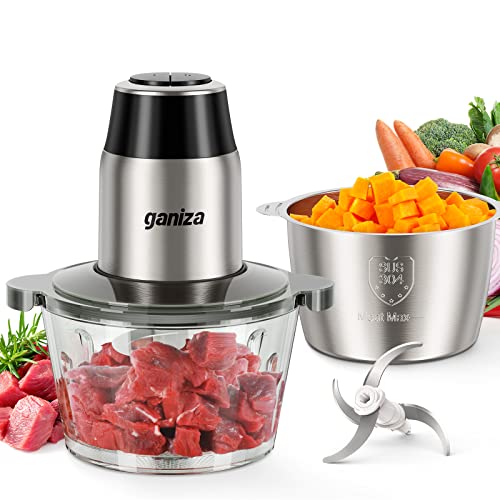
- Ganiza Food Processors with 2 Bowls, 450W Meat Grinder Vegetable Chopper — two-bowl food processor
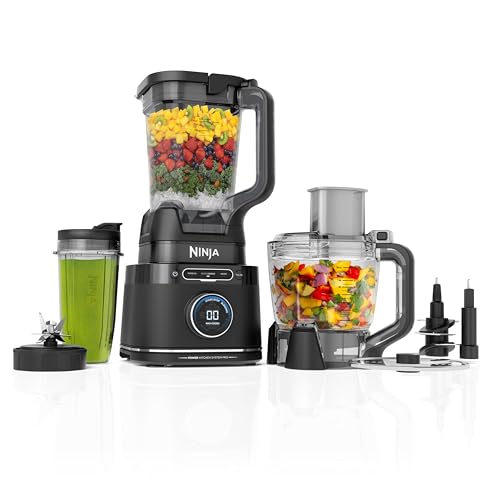
- Ninja Kitchen System, BlendSense Tech, 72 oz, 1800PW, Black, TB401 — blender/processor hybrid
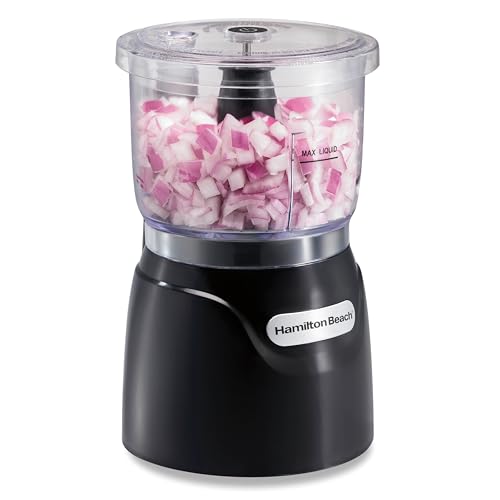
- Hamilton Beach 3 Cup Electric Vegetable Chopper & Mini Food Processor — compact food processor/chopper
Side-by-Side Model Comparison
| Factor | Food Processor Examples | Blender/Hybrid Example |
|---|---|---|
| Primary strength | Chopping, slicing, shredding, thick purees, dough | Smoothies, frozen drinks, liquid soups, single-serve blends |
| Documented capacity | 3 cups, 8 cups, 9 cups, 12 cups | 72-oz pitcher, 24-oz single-serve cup, 8-cup processor bowl |
| Documented power | 350W, 450W, 450W, 1000 peak watts | 1800 peak watts |
| Key blades/attachments | Chopping/pureeing blades, dough blades, reversible slicing/shredding discs | Total crushing/chopping blade, hybrid edge blades, dough blade, slicing/shredding disc |
| Cleanup notes | Dishwasher-safe removable parts; stack-and-snap or stack-and-press assembly on Hamilton Beach models | Containers, lids, and blades listed as top-rack dishwasher safe |
| Control style | Auto-iQ presets, two speeds, simple function guide | BlendSense automatic programs, 10 variable speed settings |
Dimension-by-Dimension Tradeoffs
Texture Control and Cut Precision
Food processors are built around controlled cuts. The Ninja Professional Plus Food Processor, 1000PW, 9-Cup, Grey, BN601 includes precision stainless steel blades and Auto-iQ presets for chopping, slicing, pureeing, and dough. The Hamilton Beach 12 Cup Stack & Snap Food Processor and Vegetable Chopper includes a reversible slicing/shredding disc and a chopping/pureeing blade. That makes food processors stronger for shredded vegetables, sliced potatoes, chopped onions, and dough.
A standard blender is optimized for liquids. The Ninja Kitchen System, BlendSense Tech, 72 oz, 1800PW, Black, TB401 uses BlendSense technology to automatically adjust speed and time for smooth results. Its pitcher is better for smoothies and frozen drinks, but the included 8-cup bowl and slicing/shredding disc give it more solid-prep ability than a standard blender.
Capacity and Batch Size
Food processor bowl capacities in this comparison range from the 3-cup Hamilton Beach 3 Cup Electric Vegetable Chopper & Mini Food Processor to the 12-cup Hamilton Beach 12 Cup Stack & Snap Food Processor and Vegetable Chopper. The Ninja Professional Plus has a 9-cup bowl, and the Ganiza model includes two 8-cup bowls in glass and stainless steel.
The blender side is led by the 72-oz pitcher on the Ninja Kitchen System TB401. Its 24-oz single-serve cup is useful for on-the-go drinks, while the 8-cup bowl supports food processing tasks.
Power and Performance
Documented motor ratings vary: 350W for the Hamilton Beach 3 Cup, 450W for the Hamilton Beach 12 Cup and Ganiza, and 1000 peak watts for the Ninja Professional Plus. The Ninja Kitchen System TB401 is documented at 1800 peak watts. Wattage is not the only factor; container shape, blade design, and automated programs also influence results.
Cleanup and Assembly
Hamilton Beach emphasizes Stack & Snap assembly on its 12-cup model and stack-and-press operation on its 3-cup chopper. Ninja Professional Plus lists removable parts as BPA-free and dishwasher safe. Ganiza uses two different bowl materials—glass and stainless steel—to help keep meat and vegetable prep separate. The Ninja Kitchen System TB401 says containers, lids, and blades are top-rack dishwasher safe.
Safety and Usability
Manufacturers include different safety and convenience features. Ninja Professional Plus mentions built-in safety mechanisms that only operate when properly assembled. Ganiza describes an automatic stopping design and overheating protection. The Ninja Kitchen System TB401 has BlendSense automated programs and variable speed control.
Who Should Choose Each
Choose a dedicated food processor if:
- You regularly chop vegetables, shred cheese, slice potatoes, make pie dough, pizza dough, or thick dips.
- You want a simple bowl-and-blade setup rather than a pitcher.
- You need larger solid-prep capacity, such as the 12-cup Hamilton Beach or 9-cup Ninja Professional Plus bowl.
- You want separate bowls for meat and vegetables, such as the Ganiza two-bowl design.
- You only need small everyday chopping, such as the Hamilton Beach 3 Cup chopper.
Choose a blender or hybrid if:
- You make smoothies, shakes, frozen coffee, cocktails, or blended soups regularly.
- You want large drink batches, such as the 72-oz Ninja Kitchen System pitcher.
- You want one base that also includes a food processor bowl, dough blade, chopping blade, and slicing/shredding disc.
- You need a single-serve cup with a spout lid for on-the-go blends.
FAQ
Can a blender replace a food processor?
It depends on the tasks. A standard blender is best for liquids and may struggle with dry or thick mixtures. A hybrid like the Ninja Kitchen System TB401 narrows the gap because it includes an 8-cup processing bowl, chopping blade, dough blade, and slicing/shredding disc.
Can a food processor make smoothies?
A food processor can puree soft ingredients, but its bowl shape and blade design are not optimized for crushing ice or creating pourable smoothies. For daily smoothies, a blender pitcher or single-serve blender cup is more convenient.
Which is better for dough: food processor or blender?
A food processor with a dough blade is generally the better choice. The Ninja Professional Plus BN601 includes a dough blade, and the Ninja Kitchen System TB401 also includes a dough blade in its processor bowl.
What is the main difference between a food processor and a blender?
A food processor excels at cutting solid foods into controlled pieces—chopping, slicing, shredding—and mixing thick or dry ingredients. A blender excels at liquefying ingredients with enough liquid. Hybrids blur the line by adding processor bowls to blender bases.
Which is easier to clean?
Many supplied models have dishwasher-safe removable parts, but a blender pitcher can be rinsed with warm water and dish soap after a smoothie. Food processors may have more parts—bowls, lids, blades, discs—so cleanup can take slightly longer.