
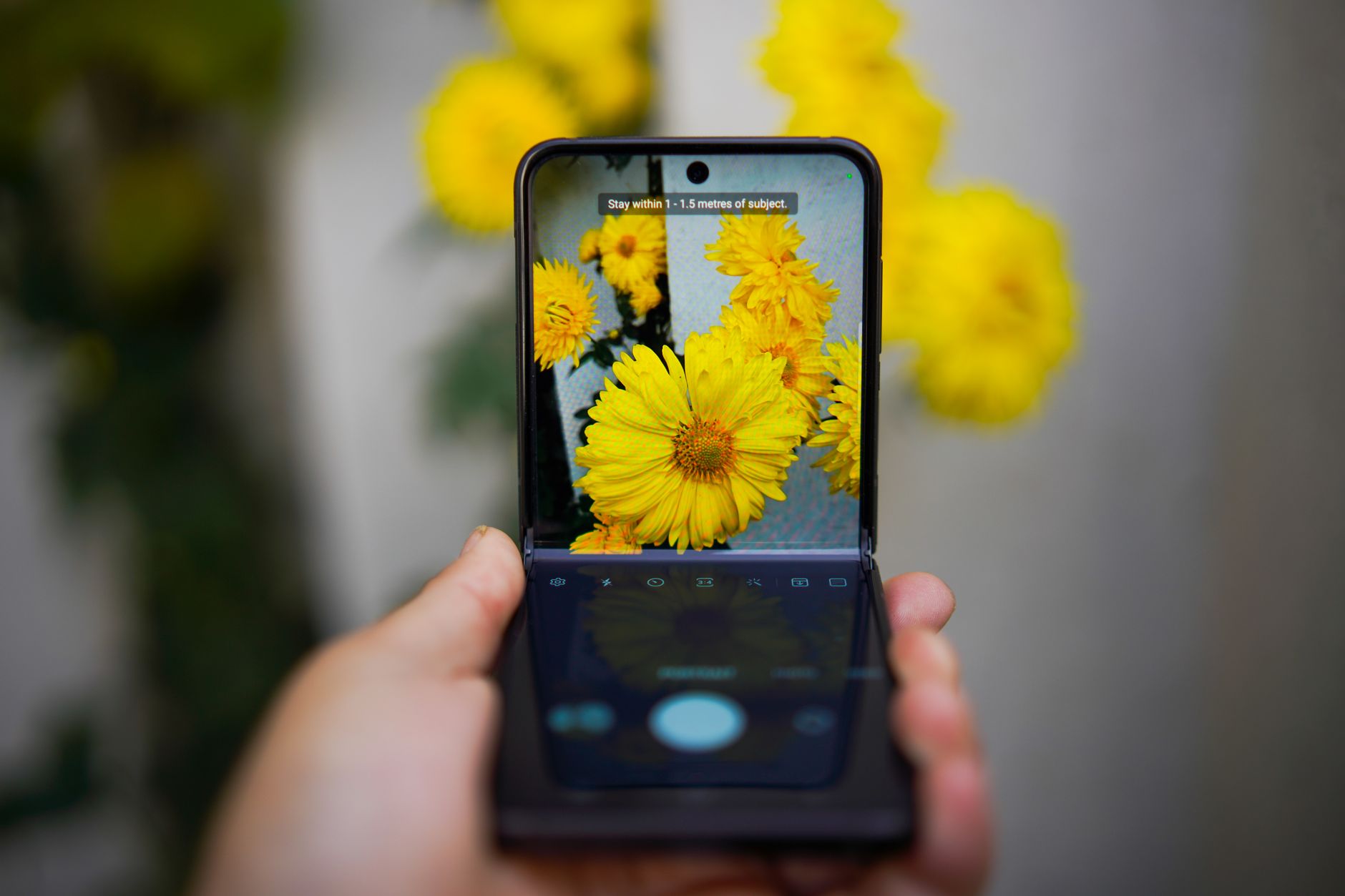

Foldable phones are worth it if you want a pocketable device that opens into a larger display for reading, multitasking, or media, and you are comfortable paying a premium and treating the hinge and inner screen with care. They are usually not worth it if your priorities are the lowest price, maximum battery life, the simplest durability, or the best camera value. The right answer depends on your daily habits, risk tolerance, and how long you keep phones.
Key takeaways
- Foldables are a fit when a larger screen in a smaller footprint matters more than price, ruggedness, or maximum battery life.
- They are a weak fit if you want a simple, low-maintenance phone that you can treat roughly without worry.
- The hinge and folding screen add mechanical complexity, so protection, coverage, and repair options deserve extra attention.
- Compare the total cost of ownership: device price, case, insurance, repairs, and how long you plan to keep it.
- Try the exact model in person if possible. Check weight, open/close feel, crease visibility, one-handed use, and how your key apps look on the inner screen.
Essential concepts
Most foldables fall into two broad designs. A book-style foldable opens like a book to reveal a larger inner screen, while a flip-style foldable folds a standard-size screen down into a more compact shape. The design you choose changes the benefits and the tradeoffs.
Book-style foldables
These are aimed at people who want a larger canvas for reading, split-screen multitasking, or media. The appeal is having a tablet-like experience in a device that can still fit in a pocket. The tradeoff is that you may use a smaller outer screen for quick tasks and need to open the device for the main experience.
Flip-style foldables
These are aimed at people who want a normal phone experience that becomes smaller when closed. The appeal is pocketability and a familiar main screen. The tradeoff is that the inner screen is still the main screen, so you still need to care for the fold and hinge.
What matters more than the form factor
Form factor is only the starting point. The better question is whether the specific foldable you are considering solves a problem you have often enough to justify its cost, weight, and care requirements. If you rarely want a larger screen or a smaller pocket footprint, a standard phone may be simpler.
Decision factors
Use these factors to decide whether a foldable phone fits your life. None of them is automatically a dealbreaker, but they should shape your expectations.
Price and total cost
If the foldable you want costs more than a comparable non-folding phone, decide whether the folding design is worth the difference to you. Also consider the case, insurance, and potential repair costs, not just the upfront price.
Durability and care
A foldable has a hinge and a folding screen, so it generally asks for more careful handling than a standard phone. Think about how you use your phone: do you often drop it, stuff it in a bag with keys, or use it in dusty or wet environments? If yes, a foldable may add worry.
Battery life
A larger inner screen can draw more power when you use it, and the extra hardware can affect battery life. Compare battery capacity, charging speed, and real-world reports for the exact model. If you need maximum battery life above all else, a standard phone may be easier to live with.
Camera and performance
Some foldables prioritize the folding design over camera hardware or battery size. If camera quality is your top priority, compare sample photos and specifications for the specific model rather than assuming a foldable is better or worse. The same applies to gaming and heavy productivity.
Software and app experience
The value of a larger inner screen depends on whether your apps adapt well to it. Check how your most-used apps handle split-screen, resizing, and continuity between the outer and inner screens. If you rely on apps that do not scale well, the benefit may be smaller.
Repair, warranty, and insurance
Because foldables have more moving parts, repair options and coverage matter. Review the warranty, return window, insurance deductible, and authorized repair network where you live. If coverage is expensive or limited, factor that into the decision.
Decision table
| If your top priority is… | A foldable may be… | Ask yourself… |
|---|---|---|
| A larger screen in a smaller footprint | A strong fit | Will I open it often enough to justify the extra cost and care? |
| Lowest upfront price | A weak fit | Is the folding feature worth paying more than a standard phone? |
| Maximum battery life | A mixed fit | Does the specific model last through my typical day? |
| Rugged, worry-free use | A weak fit | Will I be comfortable with a hinge and folding screen? |
| Best camera value | A mixed fit | Does the camera meet my needs compared with non-folding options? |
| Multitasking and media | A strong fit | Do my apps work well on the inner screen? |
| Long-term repairability | A mixed fit | What repair and coverage options are available near me? |
Practical examples
These scenarios show how the same foldable can be a great purchase for one person and a poor fit for another.
Commuter who reads and works on the go
If you often read, answer messages, or view documents on a train or bus, a book-style foldable can give you more screen without carrying a tablet. Check whether the weight and thickness feel comfortable when closed, and whether the outer screen is good enough for quick replies.
Multitasker who wants split-screen apps
If you regularly run two apps side by side, a larger inner screen can be useful. Before buying, test the apps you use most in split-screen mode. If they feel cramped or unsupported, the advantage shrinks.
Traveler who wants one device
A foldable can replace a phone and a small tablet for some travelers, which may reduce what you carry. The tradeoff is that you may need a case, insurance, and a charging plan for heavy screen use.
Budget-focused buyer
If you want the lowest total cost over several years, a standard phone is often simpler to buy, protect, and repair. A foldable can still make sense if the larger screen or compact shape solves a daily problem you value highly.
Photo and video creator
If camera quality is your main reason for upgrading, compare the specific foldable with non-folding phones in the same price range. The folding design may not automatically mean a better camera, and the best choice depends on the shots you take.
Limitations and tradeoffs
Foldables are not automatically better phones. They are a different set of tradeoffs.
- They can cost more than comparable non-folding phones, so the folding feature needs to be worth the premium to you.
- The hinge and folding screen add points of wear that a standard phone does not have.
- Battery life can suffer when you use a large inner screen heavily, depending on the model.
- Repairs can be more complex or expensive, and coverage terms vary.
- Some apps may not adapt well to foldable screens or switching between inner and outer displays.
- Cases and accessories may be more limited, bulkier, or more expensive.
- Water and dust resistance varies by model, so check the specific rating if that matters to you.
- Resale and trade-in values can change quickly, so do not count on a fixed value.
How to decide before you buy
- Write down your top three phone priorities. Examples: camera, battery, pocketability, big screen, durability, or price.
- Decide whether a foldable clearly improves at least one priority without badly hurting the others.
- Try the exact model in a store if possible. Open and close it, check the crease, test one-handed use, and look at your favorite apps.
- Compare total cost: device, case, insurance, expected repair risk, and how long you plan to keep it.
- Read the return policy and warranty. Know what is covered and what is not before you commit.
- If you are unsure, wait. A foldable is easier to justify when you can name the daily problem it solves.
FAQ
Are foldable phones worth it?
They are worth it for some people: those who want a larger screen in a smaller footprint and will care for the hinge and inner screen. They are less worth it for people who prioritize the lowest price, maximum battery life, or rugged simplicity.
Do foldable phones break easily?
They have a hinge and a folding screen, so they generally need more care than a standard phone. Durability varies by model and use, so check the warranty, return policy, and coverage options.
Are foldable phones good for everyday use?
Many people use them as their main phone, but the experience depends on the model and your habits. Check battery life, app behavior, weight, and how comfortable you are with the folding screen.
Do foldable phones have worse cameras?
Not always. Camera quality depends on the specific model. If photography is your top priority, compare the exact foldable with non-folding phones in the same price range.
Are foldable phones good for gaming?
A larger inner screen can be nice for games and media, but performance, battery life, and app support depend on the model. Check reviews and specifications for the games you play.
Should I buy insurance for a foldable phone?
Because repairs can be costly and complex, many buyers consider insurance or an extended warranty. Compare the deductible, coverage limits, and repair process before deciding.