

Products Mentioned in This Guide
As an Amazon Associate, TheGearPool may earn from qualifying purchases.




Short verdict
Short verdict: Wireless earbuds are the better everyday choice for most people who want freedom from cables, built-in mics, EQ apps, water resistance, and charging-case convenience. Wired earbuds are the better choice when you want a simple plug-in connection, no earbud charging routine, and typically lower latency. If you commute, take calls, or work out, go wireless; if you hate charging or need a physical connection, stay wired.
Amazon affiliate disclosure: As an Amazon Associate, TheGearPool may earn from qualifying purchases. This does not affect our coverage. Product availability and details can change on Amazon.
Key takeaways
- Wireless wins on convenience: no cable snag, a charging case, and features like EQ, multipoint, and water resistance on many models.
- Wired wins on simplicity: no earbud battery, no pairing, and typically lower latency.
- Check the specs that matter: battery, IP rating, multipoint, mic quality, and fit tips.
- For workouts: look for IPX4 or better; one supplied model lists IPX7.
- For calls and device switching: multipoint is listed on two supplied models.
Table of contents
- Short verdict
- Key takeaways
- Wireless vs wired side by side
- Wireless earbud models to compare
- Dimension-by-dimension tradeoffs
- Who should choose wireless earbuds
- Who should choose wired earbuds
- FAQ
Wireless vs wired side by side
| Factor | Wireless earbuds | Wired earbuds |
|---|---|---|
| Connection | Bluetooth pairing to phone, tablet, or PC; some models support multipoint. | Plugs into a headphone jack, USB-C, Lightning, or adapter. |
| Power | Battery in earbuds plus charging case; requires charging. | No earbud battery for standard passive models; no charging case. |
| Freedom | No cable to snag; easier to move around. | Cable can snag or tangle, but does not need pairing. |
| Latency | Can add lag in some apps or games; varies by device and model. | Typically lower latency because the signal is direct. |
| Features | Often includes mics, touch controls, EQ apps, ambient modes, and water-resistance ratings. | Usually simpler; inline mic and controls vary by model. |
| Best for | Commutes, workouts, calls, travel, and everyday phone use. | Backup use, low-latency listening, devices with headphone jacks, and no-charge routines. |
Wireless earbud models to compare
If you are leaning wireless, these are the supplied models to compare. The table uses manufacturer-documented features only; it does not include prices or ratings because those were not supplied.
| Model | Battery claim | Water/sweat rating | Connection and features | Warranty |
|---|---|---|---|---|
| JLab Go Air Pop+ True Wireless Earbuds, in Ear Headphones, Bluetooth Earphones, 35H Playtime Ear Buds, Bluetooth Earbuds with Microphone, USB-C Charging Case, Dual Connect, EQ3 Sound, Navy Blue | 9+ hours per earbud; 26+ hours from USB-C case; 35+ hours total | IPX4 | Bluetooth 5.3; Dual Connect; EQ3 presets; JLab App; MEMS mic; touch controls | 2-year JLab warranty |
| JLab Go Air Pop+ Earbuds, Dual Connect, EQ3 Sound, Tones 1615 | 9+ hours per earbud; 26+ hours in USB-C case; 35+ hours total | IPX4 | EQ3 presets; Dual Connect; touch controls; skin-tone inspired shades developed with Orly Color Labs | 2-year JLab warranty |
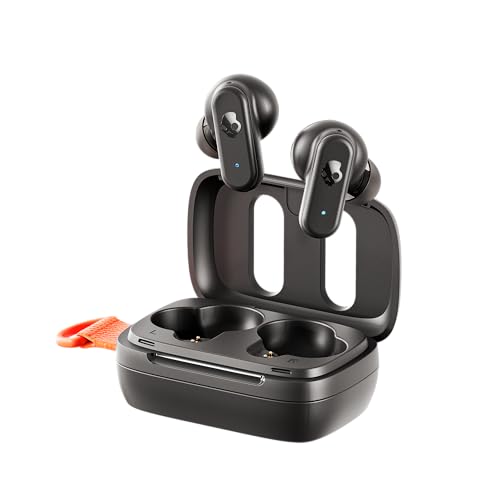
| Skullcandy Dime 3 Wireless In-Ear Bluetooth Earbuds – True Black | Up to 20 hours total: 8 hours in earbuds plus 12 hours in case; Rapid Charge: 10 minutes gives 2 hours | IPX4 | Tile finding technology; 3 preset EQ modes; multipoint pairing; built-in strap | 1-year USA limited warranty |
| Sony WF-C510 Truly Wireless Bluetooth Earbud Headphones, Black | Up to 11 hours; up to 22 hours with case; quick charge: 5 minutes gives 1 hour | IPX4 | Multipoint; Ambient Sound Mode; built-in mic; DSEE; cylindrical case; button operation; charging cable sold separately | Not listed in supplied data |
| Sport Wireless Earbuds,60Hrs BT5.4 ENC IPX7 Waterproof Earhooks Deep Bass | Up to 12 hours single charge; 48 hours in case; 60 hours total | IPX7 waterproof | 10mm vibrating diaphragm drivers; over-ear hooks; Bluetooth 5.4; up to 33 ft range; touch controls; built-in mics | Not listed in supplied data |
Dimension-by-dimension tradeoffs
Use these tradeoffs to match the category to your routine.
Freedom and fit
Wireless earbuds remove the cable, which matters if you move around, commute, or work out. The supplied wireless models offer different fit approaches, including multiple gel tip sizes and an over-ear hook structure. Wired earbuds stay attached to your device, so the cable can snag, but you never have to worry about a bud falling out and rolling away.
Battery and charging
Wireless earbuds need charging. Among the supplied models, documented totals range from up to 20 hours to 60 hours with the case. Wired earbuds do not need an earbud battery for standard passive listening, so they can be a better backup if you often forget to charge.
Sound quality and tuning
Wireless earbuds can include EQ presets and app control. Several supplied models list EQ modes, app support, or DSEE processing. Wired earbuds skip Bluetooth compression, but the actual sound still depends on the driver, fit, and source. Neither category is automatically better.
Latency and connection
Wired earbuds typically have lower latency because the audio signal travels through the cable. Wireless earbuds depend on Bluetooth and device support; some apps and games can show audio delay. If low latency is the priority, wired is the safer pick. If you want multipoint, two supplied models list it.
Calls and microphones
Wireless earbuds include built-in mics, and the supplied models list features like MEMS mics, ENC, or hands-free calling. Wired earbuds may include an inline mic, but not all do. For frequent calls, check for a mic and a fit that seals well.
Durability and workouts
If you sweat or train outdoors, water resistance matters. Supplied wireless models list IPX4 or IPX7 protection. Wired earbuds can work for workouts, but the cable can catch on equipment and may not be water-resistant.
Device compatibility and convenience
Wireless earbuds pair over Bluetooth, so they work with many phones, tablets, and PCs, but they need pairing and charging. Wired earbuds need the right port or adapter, but they are plug-and-play. If your phone lacks a headphone jack, wired use may require an adapter.
Who should choose wireless earbuds
Choose wireless earbuds if you want:
- No cable between your phone and ears.
- A charging case and all-day battery claims. Among supplied models, documented totals range from up to 20 hours to 60 hours.
- Features like EQ presets, multipoint, ambient sound, Tile finding, or IPX7 waterproofing.
- A better fit for commuting, workouts, calls, and travel.
If you want a specific starting point, review the exact models in the table above. The supplied JLab options emphasize EQ3 and Dual Connect. Another supplied model lists Tile and multipoint; another lists multipoint and Ambient Sound Mode; another lists IPX7 and a 60-hour total. These are manufacturer claims, not test results.
Who should choose wired earbuds
Choose wired earbuds if you want:
- No earbud battery and no charging case.
- A simple plug-in connection without Bluetooth pairing.
- Typically lower latency for gaming, video editing, or lip-sync-sensitive use.
- A backup pair that works even when your wireless buds are out of power.
- A device with a headphone jack, or you do not mind using an adapter.
Wired earbuds are also a practical choice if you dislike managing another battery. They may be less convenient for workouts or commuting because of the cable, but they avoid charging entirely for standard passive listening.
FAQ
Are wireless earbuds better than wired?
For most everyday phone, commute, and workout use, wireless earbuds are more convenient because they remove the cable and add features like charging cases, mics, EQ, and water resistance. Wired earbuds are better if you want no charging, simple plug-and-play use, and typically lower latency.
Do wireless earbuds sound worse than wired?
Not automatically. Wired can avoid Bluetooth compression, but sound quality depends on the driver, fit, source, and tuning. Several supplied wireless models list EQ presets or sound processing, so you can adjust the sound to taste.
Which is better for workouts?
Wireless earbuds with a water-resistance rating are usually easier for workouts because there is no cable to snag. The supplied models list IPX4 or IPX7 protection. Wired earbuds can work, but sweat and cable snags are bigger risks.
How long do wireless earbuds last per charge?
It varies by model. In the supplied data, battery claims range from up to 20 hours total to 60 hours total with the charging case. Wired earbuds do not need an earbud battery for standard passive listening.
Can wireless earbuds be used for gaming?
Yes, but latency can be an issue. Wired earbuds typically have lower latency. If you game with wireless earbuds, check whether the model and device support low-latency modes or codecs; the supplied data does not list gaming modes.
What is the main tradeoff between wireless and wired?
Wireless gives you freedom and features at the cost of charging and possible latency. Wired gives you simplicity and a direct connection at the cost of a cable and usually fewer smart features.