
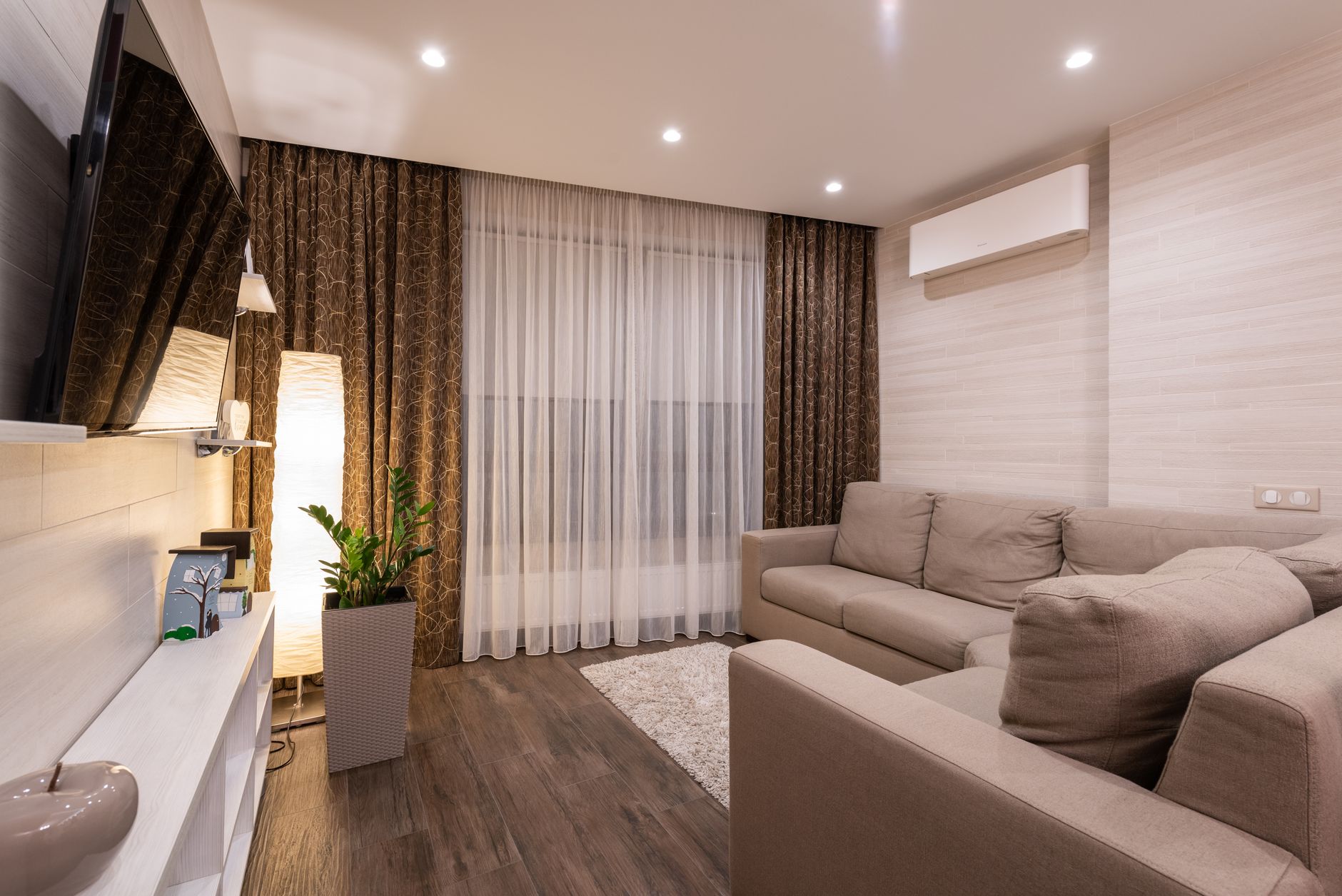

An air purifier removes particles from the air; a dehumidifier removes water vapor from the air. Purifiers trap dust, pollen, pet dander, smoke, and airborne mold spores. Dehumidifiers pull moisture out of the air so condensation, damp surfaces, and musty odors stop getting worse. If your complaint is “the air feels dirty,” you want a purifier. If it’s “the air feels wet,” you want a dehumidifier. Some compact 2-in-1 units do a version of both.
Amazon affiliate disclosure: TheGearPool earns a commission from qualifying purchases made through links on this page. Product details below are taken from manufacturer listings and specifications; we have not independently lab-tested these units.
Products Mentioned in This Guide
As an Amazon Associate, TheGearPool may earn from qualifying purchases.



Key takeaways
- Different jobs, no overlap by default: purification is filtration; dehumidification is moisture removal. Neither one replaces the other.
- Different specs to compare: purifiers are judged on filter type and airflow/coverage, dehumidifiers on moisture removed per day (pints or ounces) and tank size.
- Different rooms: purifiers suit bedrooms, living rooms, offices, and pet areas; dehumidifiers suit basements, bathrooms, closets, laundry rooms, and RVs.
- Combos exist: some dehumidifiers add a HEPA or filter-cotton stage, and small 2-in-1 units handle both duties in tight spaces.
- Buy for the dominant problem first. Fix moisture if the room feels damp or smells musty; fix filtration if the air feels dusty, smoky, or allergy-heavy.
Table of contents
The core difference between an air purifier and a dehumidifier
An air purifier pulls room air through one or more filter stages and returns it cleaner. A HEPA-style filter captures fine particles, while a carbon layer handles odors and some gases. The unit changes the composition of the air, not its moisture content. Run a purifier in a damp basement and the room will still be damp.
A dehumidifier pulls moisture out of the air and collects it in a tank or routes it through a drain hose. Most full-size units use a compressor; many compact models use thermoelectric (Peltier) cooling, which tends to be quieter but removes less water per day. The unit changes the humidity of the air, not how much dust or pollen is floating in it. Run a dehumidifier in a dusty room and the dust stays.
That is why “air purifier vs dehumidifier” is really a question about symptoms: particles versus moisture. Whichever symptom is bothering you is the one to shop for first.
Air purifier vs dehumidifier: side-by-side comparison
| Dimension | Air purifier | Dehumidifier | 2-in-1 combo unit |
|---|---|---|---|
| Primary job | Removes airborne particles | Removes water vapor | Attempts both in one footprint |
| What it targets | Dust, pollen, pet dander, smoke, some mold spores, odors (with carbon) | Condensation, high relative humidity, damp musty air | Both, usually scaled to small rooms |
| Key spec to compare | Filter type (e.g., HEPA) and airflow or coverage in sq ft | Moisture removed per day and tank capacity | Both, plus whether a drain hose is included |
| Humidity control | None | Yes | Yes, on the dehumidify side |
| Particle filtration | Yes, that is the point | Only if a filter stage is included | Yes, usually a lighter filter stage |
| Water handling | No water to empty | Tank to empty or hose to drain | Tank or hose, plus filters to maintain |
| Noise profile | Fan noise; sleep modes are common | Compressor hum or Peltier fan noise | Varies; sleep modes are common |
| Rooms it suits | Bedroom, living room, office, pet areas | Basement, bathroom, closet, RV, laundry | Small bedroom, bathroom, closet, RV |
| Routine maintenance | Replace or clean filters | Empty and clean the tank, check the hose | Both |
Dimension-by-dimension tradeoffs
1. Air quality job: particles versus moisture
Purifiers address what you can see floating and what you breathe in — dander, pollen, smoke particles, dust. Dehumidifiers address what you feel on your skin and see on windows — clammy air, fogged glass, damp corners, that closed-up smell in a closet or basement. They are not competing solutions; they are two different problems that often happen in the same house.
2. The spec that matters most on each side
For purifiers, the filter stage and the airflow rating decide how much air actually gets cleaned and how often. Coverage claims in square feet are a starting point, not a guarantee, since ceiling height and doorways change real-world performance. For dehumidifiers, rated moisture removal per day is the number that separates a toy from a tool — a compact thermoelectric unit might list ounces per day, while a compressor unit lists pints. Tank size tells you how often you will be emptying it.
3. Coverage and room size
Compact 2-in-1 units are typically aimed at small spaces — roughly a single bedroom, bathroom, closet, or RV. Full-size dehumidifiers are built for basements and open floors measured in hundreds to thousands of square feet. If you have a large, genuinely wet space, a dedicated dehumidifier with a drain hose will outperform a combo unit. If you have a 100–270 sq ft bedroom that gets stuffy and slightly damp, a combo can be enough.
4. Noise and sleep-friendliness
Purifiers are mostly fan noise, and most models include a low setting for night use. Dehumidifiers add a compressor hum unless they use Peltier cooling, and many compact units advertise sleep modes in the low-30s dB range, which is roughly a quiet whisper. If the unit lives in a bedroom, prioritize a documented sleep mode and dimmable or switchable lights.
5. Maintenance, drainage, and running cost
Purifiers need filter replacement on a schedule you set. Dehumidifiers need the tank emptied — sometimes daily in a wet space — unless you attach a drain hose for continuous operation. Compact combos ask you to do both. On energy, manufacturer listings quote wattage or daily kWh; if electricity use matters, compare those figures directly rather than relying on marketing labels alone.
6. Placement in the room
Put a dehumidifier where the moisture originates: near a bathroom door, in a basement corner, inside a closet, or in an RV that sits closed up. Put a purifier where air circulates and where you spend time — a bedroom, living room, or near pet bedding. Running both in the same room is fine; they do not work against each other.
Do 2-in-1 air purifier dehumidifier combos actually work?
They work, but they are a compromise by design. A combo unit has to share one fan and one housing between two jobs, so moisture removal is usually modest compared with a dedicated compressor dehumidifier, and the filter stage is often simpler than what a dedicated purifier offers.
The trade-off is space and simplicity. In a small bedroom, bathroom, closet, or RV, one compact box that reduces dampness and captures some dust is often more practical than two appliances fighting for outlets. If your room is large, persistently wet, or your allergies are severe, separate dedicated units remain the stronger choice.
Combo and dehumidifier models worth comparing
These are the models supplied for this guide, with details as listed by the manufacturers. Sizes bracket the full range: a passive closet absorber at one end and a large basement unit at the other.
Airthereal Zephyr AZH200 Air Purifier and Dehumidifier Combo
The Airthereal Zephyr AZH200 Air Purifier and Dehumidifier Combo, 34 oz Small Dehumidifier with HEPA Filter, Up to 270 Sq Ft, Auto Shutoff, Ultra-Quiet for Bedroom, Bathroom, RV, Closet is the most explicitly dual-purpose unit here. Airthereal lists a high-efficiency filter rated to capture particles as small as 0.3 microns, airflow of 120 m³/h (about 70 CFM), and coverage up to 270 sq ft. On the moisture side it is rated to remove up to 34 oz (1000 ml) per day at 80W, with a 23.7 oz tank or the included hose for continuous drainage. Sleep mode is listed at 32 dB with dimmed lights, and there is an 8/12/24-hour timer plus auto-defrost and full-tank auto shutoff. See the Airthereal Zephyr AZH200 on Amazon.
Hoomace Small Dehumidifier with Air Purifying Function
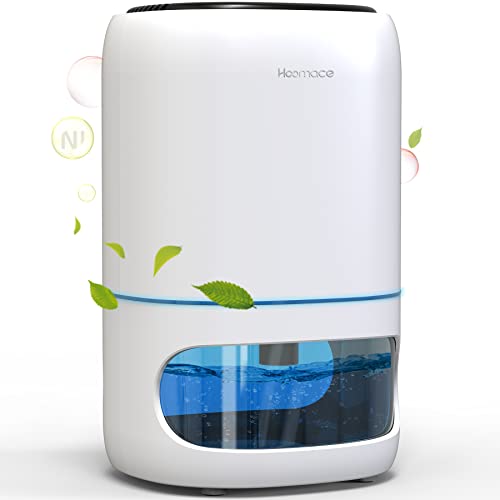
The Hoomace Small Dehumidifiers for Bedroom w/Air Purifying Function, 1000 ml/35 oz for 2500 Cubic Feet (260 sq ft) with 7 Colorful LED Lights Timer Set Negative Ions Below 30 dB, Auto Shut-Down leans on a G4 filter cotton that Hoomace says captures 90% of dust, dander, and hair, plus negative ions released during dehumidification. It uses Peltier technology with a listed noise level below 30 dB and is rated for spaces up to 260 sq ft. Hoomace rates moisture removal at up to 11 oz (350 ml) per day in 86°F and 80% RH conditions — a light-duty figure, so treat this as a small-space unit rather than a basement solution. Timers run 4/8/12 hours with auto shut-off when the tank fills. See the Hoomace dehumidifier on Amazon.
AirCyan 1500 Sq.Ft Dehumidifier, Max 32 Pint
The AirCyan 1500 Sq.Ft Dehumidifier, Max 32 Pint Quiet Dehumidifier is a dedicated dehumidifier with a 2-in-1 filter stack: H10 HEPA plus carbon. AirCyan rates it at 32 pints of moisture removal in 95°F/95% RH conditions (20 pints at 86°F/80% RH) and coverage up to 1500 sq ft, drawing roughly 2.952 kWh per day per the listing. It includes a 39-inch hose for continuous drainage, a 0.53-gallon tank, sleep mode listed at 39 dB, and 360° wheels. See the AirCyan 1500 Sq.Ft dehumidifier on Amazon.
AirCyan 4500 Sq.Ft Energy Star 2025 Dehumidifier
The AirCyan 4500 Sq.Ft Most Efficient Energy Star 2025 Dehumidifier is the large-space option. AirCyan lists 65 pints of daily moisture removal at 95°F/95% RH (41 pints at 86°F/80% RH), coverage of 4500–5500 sq ft, and roughly 4.44 kWh per day, and describes it as a 2025 Energy Star Most Efficient model. It adds WiFi app control with Alexa and Google Assistant compatibility, the same H10 HEPA and carbon filtration, a 39-inch drain hose, a 0.79-gallon tank, and sleep mode listed at 42 dB. See the AirCyan 4500 Sq.Ft dehumidifier on Amazon.
Absodry by Torrbollen Moisture Absorber
The Closet dehumidifier – Absodry by Torrbollen Moisture Absorber 1.3lb Bag — Dehumidifier for Bedroom, humidity absorber, Air Freshener and Purifier for Home Up to 90 Days, 269 ft² (White) is the no-electricity end of the spectrum. It uses calcium chloride crystal granules to absorb moisture passively, is refillable, and is rated to work for up to 90 days (about 3 months) covering up to 269 ft². There is no fan, no filter, and no cord — it freshens and dries a closed space rather than filtering moving air. See the Absodry by Torrbollen moisture absorber on Amazon.
Who should choose each type
Choose an air purifier if…
- You have allergies, pets, or a home near smoke or traffic, and dust is the main complaint.
- Your rooms are not damp — windows stay clear and there is no musty smell.
- You want the simplest maintenance routine: only filters to track, no tank to empty.
Choose a dehumidifier if…
- Windows sweat, walls feel clammy, or a closet, bathroom, or basement smells musty.
- You store valuables, tools, or gear in a damp space and want to protect them.
- You can plumb a drain hose and want hands-off operation in a genuinely wet area.
Choose a 2-in-1 combo or a filtered dehumidifier if…
- You have both complaints at a small scale — a slightly damp bedroom that also gets dusty.
- Floor space and outlets are limited, and one compact unit is more realistic than two.
- You accept that moisture removal will be modest and you will maintain both a tank and a filter.
FAQ
Can an air purifier reduce humidity?
No. A purifier filters particles and does not remove water vapor from the air, so it will not lower relative humidity. Reducing humidity requires a dehumidifier, an air conditioner, or better ventilation.
Does a dehumidifier clean the air?
Not on its own. A plain dehumidifier removes moisture but does not filter particles. Some models add a filter stage — for example, the AirCyan units listed here include H10 HEPA and carbon filters, and the Hoomace includes G4 filter cotton — which the manufacturers describe as capturing dust, dander, and hair. Treat that as a secondary benefit, not the unit’s main job.
Which one do I need for mold?
Start with moisture control. Persistent mold growth means there is a moisture source to fix or manage, and a dehumidifier addresses that side of the problem. Air purifiers can capture some airborne mold spores, but they will not stop new growth in a damp room.
Do I need both an air purifier and a dehumidifier?
Only if you have both problems. If the room feels damp and smells musty, prioritize dehumidification. If the air is dusty, smoky, or allergy-triggering but the room is dry, prioritize filtration. A 2-in-1 combo covers a light version of both in a small room.
Can I run a purifier and a dehumidifier in the same room?
Yes. They perform different functions and do not conflict. Place the dehumidifier near the moisture source and the purifier where air circulates and people spend time.
Is a 2-in-1 combo as good as two separate units?
Generally not for heavy-duty work. Combo units share one fan and housing, so moisture removal is usually lower than a dedicated compressor dehumidifier and filtration is usually simpler than a dedicated purifier. They are a space-saving compromise for small rooms, not a replacement for large-capacity equipment.