
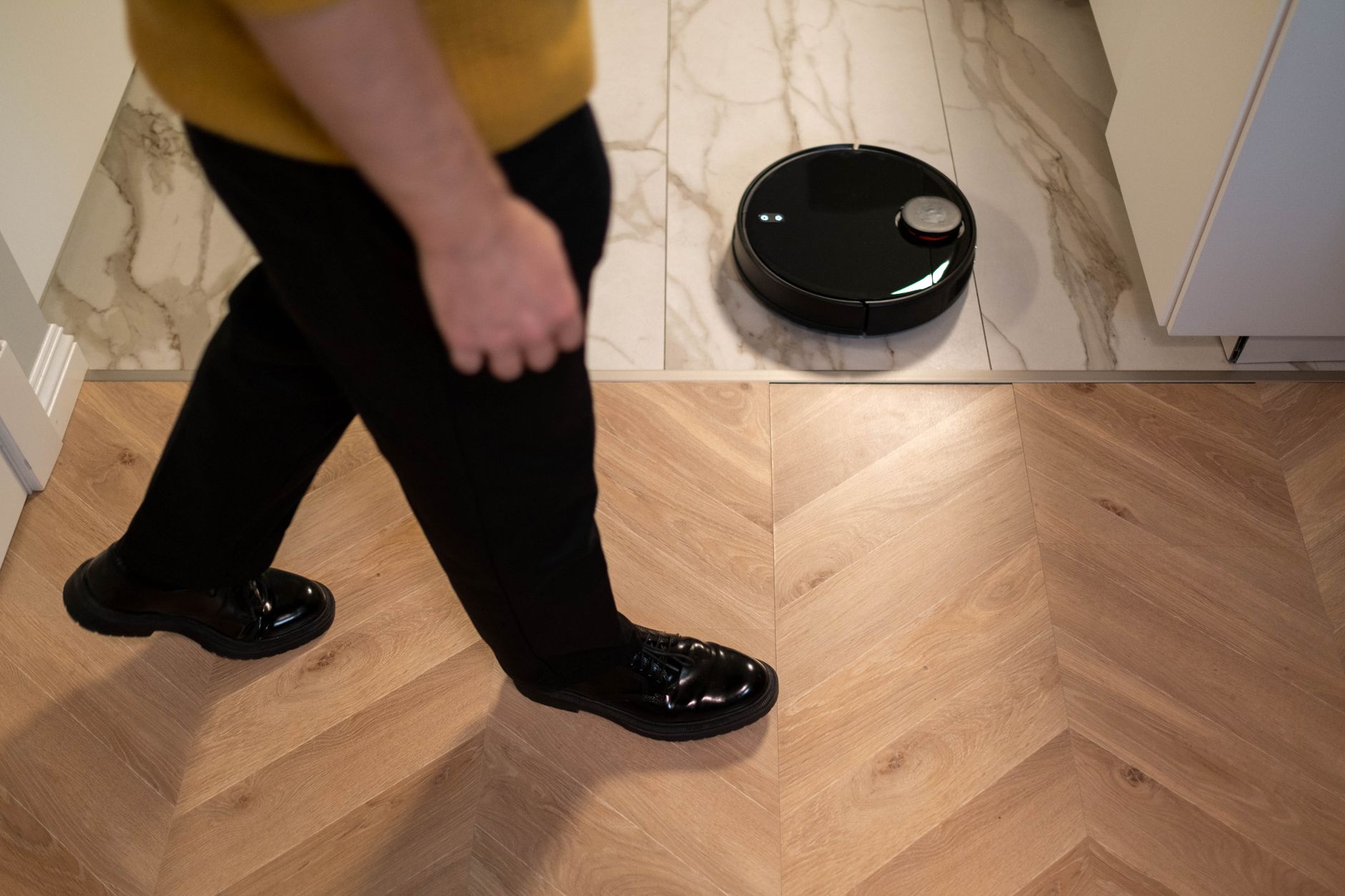

Yes—for most apartments, robot vacuums are good. They handle hard floors, low-pile rugs, pet hair, and daily dust in compact layouts with minimal effort. The best matches are apartments with mostly hard surfaces, no long shag rugs, and floors kept clear of cords, socks, and lightweight clutter. If you have a split-level, loft, or tight bathroom thresholds, choose a model with good climbing and drop sensors.
Affiliate disclosure: TheGearPool may earn a commission from qualifying Amazon purchases made through links in this article.
Key Takeaways
- Most apartments are a good fit for robot vacuums if floors are mostly hard or low-pile.
- Smart navigation, room zones, and no-go zones matter more than maximum suction in small layouts.
- Robot vacuums are daily upkeep tools, not replacements for a corded vacuum or wet-mess cleanup.
- Budget should follow layout: basic bump navigation can work in a clear studio, but mapped cleaning is worth it for one-bedroom and multi-room apartments.
- Clear cords, bath mats, pet bowls, and lightweight clutter before scheduled runs.
In This Guide
- Apartment Constraints That Decide If a Robot Vacuum Works
- Recommended Robot Vacuum Setup for Apartments
- What Changes by Room, User, and Budget
- Apartment Robot Vacuum Mistakes to Avoid
- FAQ: Robot Vacuums in Apartments
- Bottom-Line Recommendation
Apartment Constraints That Decide If a Robot Vacuum Works
Apartments usually have less square footage, but they also have compact layouts, shared walls, and limited storage. Those factors change which robot vacuum is actually useful.
Floor type and rugs
Hard floors and low-pile rugs are the easiest surface for most robot vacuums. Glossy tile, laminate, and sealed hardwood tend to work well. Thick rugs can cause some robots to drag, stall, or leave fibers behind. If your apartment has wall-to-wall plush carpet, look for a model with carpet boost and strong brush agitation, but keep expectations lower for deep cleaning.
Layout and thresholds
Open studios are forgiving. One-bedrooms with a hallway, bathroom, and kitchen need a robot that can navigate between rooms without getting stuck on transition strips or high thresholds. Split-level apartments are the trickiest case: a robot cannot handle stairs unless you carry it between floors.
Clutter and shared-space reality
Apartments concentrate daily clutter in a smaller footprint. Cords, charging cables, shoes, pet toys, and lightweight bath mats are the most common reasons a robot finishes a run with an error. If you are not willing to do a quick floor declutter before cleaning, choose a robot with object detection or strict no-go zones.
Noise and neighbors
Robot vacuums are not silent. In a building with thin walls or downstairs neighbors, it is usually safer to schedule cleaning during the day or early evening rather than late at night.
| Apartment constraint | What usually matters more | Why it matters |
|---|---|---|
| Hard floors with low-pile rugs | Hard-floor pickup and navigation | Most robots can handle the surface, so avoiding stuck runs is the bigger win. |
| Thick or high-pile rugs | Strong brush and carpet boost | Compact robots may drag or stall on long fibers. |
| Open studio | Battery life and recharge-and-resume | One open space should be cleaned without stopping halfway. |
| High thresholds or loft | Climbing height and drop sensors | A robot can get trapped or fall if the layout has level changes. |
| Cluttered floors | Object detection or no-go zones | Cords and cables cause more failed runs than weak suction. |
Recommended Robot Vacuum Setup for Apartments
The best apartment setup is usually a compact robot vacuum with mapped cleaning, room zones, and no-go zones—plus a simple routine you will actually follow.
Buy by layout, not raw suction
In a small apartment, strong suction does not help if the robot cannot navigate from kitchen to bedroom. Prioritize app-based mapping, room selection, and no-go zones so you can block the bathroom rug, pet bowl, or desk cables.
Dock placement
Place the dock on a hard floor against an open wall, not behind furniture or inside a cramped closet. Leave enough clearance around the dock so the robot can line up and return without bumping into clutter.
App settings that work for apartments
- Schedule a daily or every-other-day run during daylight or early evening.
- Create no-go zones around pet bowls, cable nests, lightweight bath mats, and desk chairs.
- Use room sequencing if you want the kitchen and living area cleaned before the bedroom.
- Set carpet boost if you have area rugs, but avoid it if it makes the robot too noisy on hard floors.
Maintenance routine
Empty the dustbin after each pet-heavy run and at least every two to three runs otherwise. Remove hair and threads from the brush roller weekly, and wipe the sensors and charging contacts. In an apartment, a neglected bin can quickly reduce suction on a robot that already has a smaller dustbin.
What Changes by Room, User, and Budget
By room
- Studio apartment: A single dock in a central open spot works well. Use no-go zones around sneakers, pet bowls, and a desk area.
- One-bedroom apartment: Look for room mapping so you can clean the bedroom, hallway, and living area without having the robot eat a bath mat.
- Multi-room apartment: Room sequencing and zone cleaning matter more. If the robot has a small battery, make sure it has recharge-and-resume.
- Kitchen: Robot vacuums are useful for dry crumbs, dust, and pet food. They should never run over water, oil, or wet spills.
- Bathroom: Close the door or set a no-go zone. Water, damp towels, bath mats, and high thresholds make bathrooms a common failure area.
- Home office: Cable management is the deciding factor. Use no-go zones under the desk unless you can secure every cord.
By user
- Pet owner: Choose a robot with a tangle-resistant brush and a bigger or easier-to-empty bin. Schedule more frequent runs and clean the brush roller often.
- Allergy or dust sensitivity: Look for a high-efficiency filter option and run the robot more often. Empty the bin outside or over a trash can without shaking dust into the air.
- Roommates or shared apartment: Keep the schedule predictable and set no-go zones for shared clutter. If noise is a concern, avoid late-night schedules.
- Split-level or loft renter: Either carry the robot between floors or create a map for each level. Do not expect a robot to climb steps.
By budget
- Entry-level: Basic bump navigation can handle a clear studio, but it lacks room zones and will struggle around clutter.
- Mid-range: This is the apartment sweet spot. Look for smart mapping, no-go zones, room scheduling, and good hard-floor pickup.
- High-end: Auto-empty docks, object detection, longer battery life, and quieter operation are nice upgrades, especially for pet owners or multi-room apartments.
Apartment Robot Vacuum Mistakes to Avoid
- Buying the strongest vacuum but ignoring navigation and no-go zones.
- Treating the robot as a full replacement for a regular vacuum.
- Running it without clearing cords, socks, shoelaces, and pet toys.
- Expecting deep cleaning on high-pile rugs or wall-to-wall plush carpet.
- Using it over wet spills, pet accidents, or damp bathroom floors.
- Placing the dock in a tight corner or behind furniture, then wondering why it cannot dock.
- Scheduling late-night runs when downstairs neighbors can hear it on hard floors.
- Forgetting to empty the bin and clean the brush roller, which reduces pickup quickly.
- Letting bath mats, pet bowls, or cable nests stay in the cleaning path.
- Buying an oversized auto-empty dock without measuring your available floor space.
FAQ: Robot Vacuums in Apartments
Are robot vacuums worth it in a small apartment?
Yes, if your floors are mostly hard or low-pile and you can keep the floor clear of cords and small clutter. They save time on daily dust and crumbs, but they are not for every layout.
Are robot vacuums too loud for apartments?
They are not silent, but many are quieter than a traditional upright. If noise is a concern, run the robot while you are awake or out, and avoid late-night schedules on hard floors.
Do robot vacuums work on apartment carpet?
Low-pile carpet and area rugs are usually fine. High-pile or shag-style rugs can cause stalling, dragging, or missed debris, so check the robot’s ability to transition onto and off those surfaces.
Can a robot vacuum replace a normal vacuum in an apartment?
No. A robot vacuum is best for daily maintenance. Keep a stick or canister vacuum for edges, upholstery, stairs, and deeper cleaning sessions.
What should I look for in a robot vacuum for a one-bedroom apartment?
Smart mapping, room zones, no-go zones, good hard-floor pickup, a compact dock, and enough battery to clean the full unit in one run.
Do robot vacuums handle pet hair in apartments?
Yes for daily pet hair control, especially if you choose a tangle-resistant brush and empty the bin frequently. They will not replace deep pet-hair cleaning on fabric.
Which is better for an apartment: robot vacuum or stick vacuum?
If you want daily, low-effort dust and crumb pickup, a robot vacuum is better. If you can only have one vacuum, a stick vacuum is usually more versatile. Many renters end up using a robot daily and a stick vacuum weekly.
Bottom-Line Recommendation
For most apartment renters, a robot vacuum is worth it when the floors are mostly hard or low-pile and you can keep clutter out of the cleaning path. Pick a compact model with smart mapping, no-go zones, and a realistic docking location. Then use it as daily upkeep, not as your only vacuum.