

To buy a chef’s knife, start with blade length, steel type, edge angle, handle feel, and upkeep. An 8-inch chef’s knife is a common all-rounder; a 7-inch Santoku is shorter, lighter, and often has a hollow edge to reduce sticking. Match the knife to your grip and maintenance routine, not just brand hype. Below we compare the supplied knife options and explain the decision process.
Key takeaways
- Choose an 8-inch chef’s knife for all-purpose cutting; choose a 7-inch Santoku for a shorter, nimble blade.
- Compare manufacturer-listed steel, edge angle, handle material, and warranty claims before buying.
- imarku and QEGNOBOK list 15–18 degree edge per side; HOSHANHO lists 13 degrees per side.
- Hollow-edge Santoku designs can help keep slices from sticking.
- A knife skills book can be a useful add-on if you want to improve technique and care.
Disclosure: This article contains Amazon affiliate links. If you buy through these links, we may earn a commission at no extra cost to you.
- Who this is for
- Selection criteria
- Quick comparison table
- Product-by-product tradeoffs
- How to choose
- FAQ
Products Mentioned in This Guide
As an Amazon Associate, TheGearPool may earn from qualifying purchases.



Who this is for
This guide helps you choose a chef’s knife or Santoku based on the supplied product records. It is most useful for:
- First-time buyers who want one go-to kitchen knife for daily chopping, slicing, dicing, and mincing.
- Home cooks deciding between a traditional 8-inch chef’s knife and a 7-inch Santoku.
- Gift buyers: two of the supplied knife listings include gift box details.
- Beginners who also want knife-skills instruction, since two books are included in the supplied comparison set.
Selection criteria
Blade length and profile
Start with length. In the supplied options, the HOSHANHO model is an 8-inch chef’s knife. The imarku and QEGNOBOK models are 7-inch Santoku knives with scalloped hollow-edge designs.
Steel and edge claims
All three knife listings describe high-carbon or stainless steel with rust, corrosion, and discoloration resistance claims. Manufacturer-listed edge angles differ:
- imarku: 15–18 degrees per side, 2.5mm blade thickness.
- QEGNOBOK: 15–18 degrees per side, 0.08 inch blade thickness.
- HOSHANHO: 13 degrees per side, with a claimed hardness up to 60 HRC.
Handle and grip
Handle feel matters because you grip the knife for long prep sessions. imarku lists a Pakkawood handle, QEGNOBOK lists an ergonomic ABS handle, and HOSHANHO lists an ultra-durable wood handle with a sloped bolster for pinch grip.
Maintenance and support claims
Check the seller’s stated after-sales support. imarku lists a 3-month refund and 1-year exchange. QEGNOBOK lists a lifetime warranty. HOSHANHO’s supplied features do not include a warranty term.
Quick comparison table
| Product | Type | Best if you want | Manufacturer-listed highlights |
|---|---|---|---|
| imarku Santoku Knife 7 Inch with Sharp Japanese High Carbon Stainless Steel | 7-inch Santoku | Gift-ready Santoku with hollow edge | Japanese high carbon stainless steel; 2.5mm blade; 15–18° edge per side; Pakkawood handle; gift box |
| Santoku Knife, 7 Inch Kitchen Knife, Ultra Sharp Chef Knife, Chef’s Knife | 7-inch Santoku | Hollow-edge slicing and a lifetime warranty claim | High-carbon German steel 3CR13MOV; 0.08 inch blade; 15–18° edge per side; ABS handle |
| HOSHANHO Kitchen Knife in Japanese High Carbon Steel, Professional High-Class Chef’s Knife 8 inch, Non-slip Ultra Sharp Cooking Knives with Ergonomic Handle | 8-inch chef’s knife | A longer all-purpose blade with a more acute edge | Japanese high carbon steel 10Cr15CoMoV; claimed up to 60 HRC; 13° edge per side; wood handle |
| Knife Skills: An Illustrated Kitchen Guide to Using the Right Knife the Right Way. A Storey BASICS® Title | Book | Learning technique and choosing the right knife | Supplied as a skill-building companion resource |
| The Zwilling J. A. Henckels Complete Book of Knife Skills: The Essential Guide to Use, Techniques and Care | Book | Knife technique and care guidance | Listed as a used book in good condition |
Product-by-product tradeoffs
Use these notes to separate the supplied options. The three knife listings all describe everyday tasks such as chopping, slicing, dicing, and mincing.
imarku Santoku Knife 7 Inch with Sharp Japanese High Carbon Stainless Steel
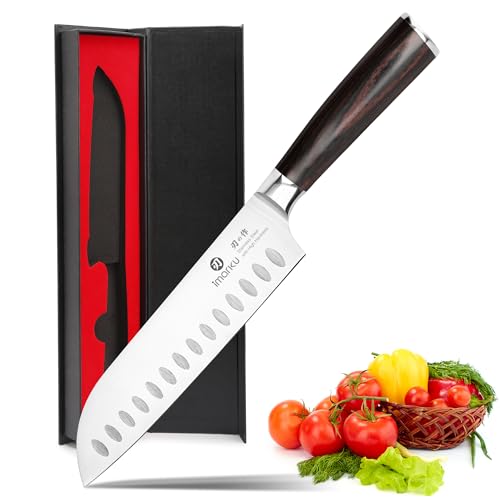
The imarku Santoku Knife 7 Inch with Sharp Japanese High Carbon Stainless Steel is a 7-inch Santoku with a scalloped hollow edge. The manufacturer lists Japanese high carbon stainless steel, a 2.5mm blade thickness, a 15–18 degree hand-polished edge per side, and a Pakkawood handle. The listing says the hollow edge creates a gap between the blade and food to keep things from sticking. It also includes a black gift box and lists a 3-month refund and 1-year exchange. The listing notes a brand-upgrade period, so packaging may vary while materials and construction are stated to be identical.
Santoku Knife, 7 Inch Kitchen Knife, Ultra Sharp Chef Knife, Chef’s Knife
The QEGNOBOK Santoku Knife, 7 Inch Kitchen Knife, Ultra Sharp Chef Knife, Chef’s Knife is also a 7-inch Santoku with a scalloped hollow edge. QEGNOBOK lists high-carbon German steel 3CR13MOV, a 0.08 inch blade thickness, a 15–18 degree edge per side, and an ergonomic ABS handle. The product page also lists a lifetime warranty. The listing uses “Japanese Chef’s knife” in the copy but specifies German steel, so compare steel type rather than relying on the phrase alone.
HOSHANHO Kitchen Knife in Japanese High Carbon Steel, Professional High-Class Chef’s Knife 8 inch, Non-slip Ultra Sharp Cooking Knives with Ergonomic Handle
The HOSHANHO Kitchen Knife in Japanese High Carbon Steel, Professional High-Class Chef’s Knife 8 inch, Non-slip Ultra Sharp Cooking Knives with Ergonomic Handle is an 8-inch chef’s knife. The manufacturer lists Japanese high carbon steel 10Cr15CoMoV, a claimed hardness up to 60 HRC, a matte blade finish, and a wood handle with a sloped bolster for pinch grip. Its listed edge angle is 13 degrees per side, which is more acute than the 15–18 degrees listed for the other two knives. The listing also claims 2x sharpness and durability of some other premium knives, but that is a manufacturer claim and is not independently verified here.
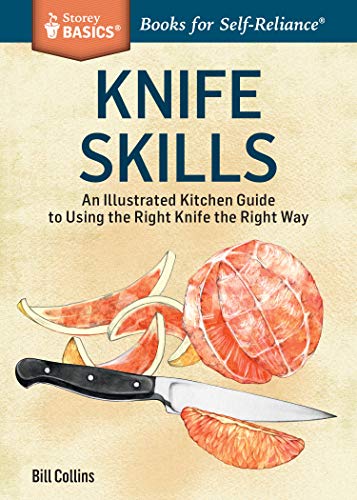
Knife Skills: An Illustrated Kitchen Guide to Using the Right Knife the Right Way. A Storey BASICS® Title
This book is not a knife, but a companion guide for learning how to choose and use kitchen knives. Use it if you want to build technique while you shop.
The Zwilling J. A. Henckels Complete Book of Knife Skills: The Essential Guide to Use, Techniques and Care
This title focuses on knife use, techniques, and care. The supplied product record lists it as a used book in good condition, so inspect condition notes if you order it alongside a knife.
How to choose
- Pick blade length first. If you want a longer all-purpose blade, the HOSHANHO 8-inch chef’s knife is the supplied match. If you prefer a 7-inch blade, compare the two Santoku models.
- Compare steel and edge claims. Check the listed steel type and edge angle. HOSHANHO lists 10Cr15CoMoV steel and a 13-degree edge per side. imarku and QEGNOBOK list 15–18 degrees per side.
- Match handle material to your grip. imarku lists Pakkawood, QEGNOBOK lists ABS, and HOSHANHO lists wood. If possible, choose the handle shape that feels secure for how you hold a knife.
- Consider hollow-edge benefits. The two Santoku options list hollow-edge designs to reduce sticking during slicing, dicing, and mincing.
- Check after-sales support. imarku lists a 3-month refund and 1-year exchange. QEGNOBOK lists a lifetime warranty. HOSHANHO does not include a warranty term in the supplied features.
- Add a skills book if needed. If technique or care is a weak point, one of the supplied books can support the purchase.
| If your priority is | Lean toward |
|---|---|
| An 8-inch all-purpose blade | HOSHANHO 8-inch chef’s knife |
| A 7-inch blade with hollow edge | imarku or QEGNOBOK Santoku |
| Gift presentation and a wooden handle | imarku or HOSHANHO |
| ABS handle and a lifetime warranty claim | QEGNOBOK Santoku |
FAQ
How do I buy a chef’s knife for the first time?
Choose a blade length and style first, usually an 8-inch chef’s knife or a 7-inch Santoku. Then compare steel, edge angle, handle material, and warranty claims. In the supplied set, HOSHANHO is the 8-inch option, while imarku and QEGNOBOK are 7-inch Santoku options.
What is the difference between a chef’s knife and a Santoku?
In the supplied options, the Santoku models are 7-inch knives with scalloped hollow edges. The HOSHANHO chef’s knife is an 8-inch blade with a 13-degree edge per side. All three are described for chopping, slicing, dicing, and mincing.
What size chef’s knife should I buy?
There is no single correct size. An 8-inch blade gives a longer cutting surface for larger all-purpose tasks. A 7-inch Santoku can feel shorter and lighter. Choose the length that matches your cutting style and workspace.
Which steel is best for a chef’s knife?
The supplied knives list different steel types: imarku lists Japanese high carbon stainless steel, QEGNOBOK lists German 3CR13MOV, and HOSHANHO lists Japanese 10Cr15CoMoV. All are described with rust, corrosion, and discoloration resistance claims, so compare steel type alongside blade geometry and care requirements.
Are knife skills books worth buying with a knife?
They can be useful if technique and care are a priority. The supplied books cover using the right knife, technique, and care, but they are not knives.