
Products Mentioned in This Guide
As an Amazon Associate, TheGearPool may earn from qualifying purchases.



Short Verdict
Short verdict: For most homes deciding between air purifiers vs ionizers, choose an ionizer if you want a compact, filterless, low-maintenance plug-in for odors, pet smells, and airborne particles in smaller rooms. Choose a conventional HEPA-style air purifier if you want deeper physical particle capture and are willing to replace filters. Below, the exact ionizer models—Clarifion, ShaoDelynxia, OION B-1000, and Purifyair—show what the ionic side actually offers.
Key Takeaways
- Ionizers in this comparison rely on negative ion/ionic technology; most are filterless and plug-in.
- Filtered air purifiers physically trap particles but typically require periodic filter replacements.
- Ionizers are strongest for low-maintenance odor control and small-space use; HEPA-style purifiers are usually better for allergy-focused particle capture.
- If ozone sensitivity is a concern, look for a CARB-certified ionic unit such as the OION B-1000.
How Ionizers Work
These plug-in and ionic units generate negative ions. According to the manufacturer descriptions supplied for the models below, the negative ions attach to airborne allergens such as dust, dander, pollen, smoke, and odors. That can make particles clump or settle out of the breathing zone. The Clarifion and ShaoDelynxia plug-in models emphasize filterless operation. The OION B-1000 adds carbon filtration and UV-C while also producing negative ion output.
How Filtered Air Purifiers Differ
A conventional air purifier typically pulls room air through a mechanical filter—often HEPA-style—to trap particles inside the unit. The key tradeoff is maintenance: filters must be replaced periodically. The ionizer models compared here are mostly filterless or use a permanent filter, which reduces replacement-filter costs but may not physically trap and retain particles the same way a HEPA-style filter does.
Side-by-Side Comparison Table
| Dimension | Filtered air purifier (typical) | Ionizer (supplied models) |
|---|---|---|
| Primary action | Mechanical filter captures particles | Negative ions attach to particles; some add carbon filtration or UV-C |
| Filter replacements | Usually required | Often filterless or permanent filter |
| Maintenance | Replacement filter purchases and installation | Low-maintenance; plug in and occasionally wipe down |
| Noise | Fan-dependent, can be audible at higher speeds | Advertised as near-silent or whisper-quiet |
| Space and placement | Larger unit, often centralized in one room | Compact plug-in; brands recommend one per room |
| Ozone considerations | Not typical for HEPA-only filtration | Ionic/UV units may need certification; OION B-1000 is CARB certified |
Exact Ionizer Models in This Comparison
Amazon affiliate disclosure: TheGearPool may earn a commission from qualifying purchases made through links in this article. Prices and availability can change.
| Model | Type | Advertised highlights from the product listing |
|---|---|---|
| Clarifion – Air Ionizers for Home (3 Pack), Negative Ion Filtration System, Quiet Air Freshener for Bedroom, Office, Kitchen, Portable Air Filter Odor, Smoke Dust, Pets, Eliminator, Mini Air Cleaner | Plug-in ionizer 3-pack | Filterless negative ion technology; compact and portable; advertised for bedrooms, offices, kitchens, pet odors, dust, dander, pollen, and smoke. |
| Plug In Air Ionizers 4 Pack – Small Air Purifiers for Home, Bedroom, Travel | Plug-in ionizer 4-pack | Filterless anion technology; near-silent operation; compact at 2.4 inches wide and 4 inches long; recommended for multi-room and travel use. |
| Air Ionizers 4 Pack – Plug In Mini Air Purifiers for Home, Bedroom, Office | Plug-in mini ionizer 4-pack | Filterless operation; quiet; designed for bedrooms, bathrooms, kitchens, living rooms, garages, hallways, and offices. |
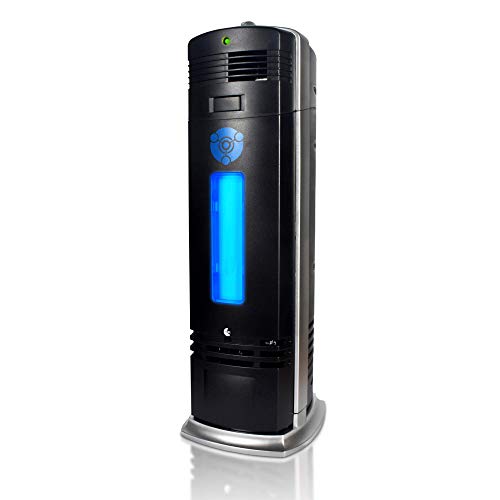
| OION Technologies B-1000 Permanent Filter Ionic Air Purifier Pro Ionizer with UV-C, New | Ionic air purifier with UV-C | Permanent filter and carbon filtration; negative ion output; UVGI technology; 7.5W energy use; ozone <0.05 ppm; CARB certified; 17 x 6 x 7 inches. |
| Air Ionizers 3 Pack, Small Negative Ion Air Purifiers for Home,Bedroom | Plug-in negative ion 3-pack | Filterless negative ion output; quiet operation; power-saving internal chip; compact plug-in convenience. |
The exact product names above are taken directly from the supplied product records. The feature claims are manufacturer-provided listing descriptions, not independent test results.
Dimension-by-Dimension Tradeoffs
Filtration effectiveness
A HEPA-style air purifier is usually stronger for physically trapping particles inside the unit. The ionizers here are described by their manufacturers as reducing airborne allergens by causing negative ions to attach to particles and settle them out of the breathing zone. You may need to dust surfaces more often because the particles are not necessarily stored in a filter.
Maintenance and long-term cost
The plug-in ionizers listed above are filterless, so there are no replacement filters to buy. The OION B-1000 uses a permanent filter and carbon filtration, so it is marketed as having no costly filters to replace. A conventional filtered purifier typically requires periodic filter replacements, which adds ongoing cost.
Noise and sleep use
The supplied ionizers are advertised as near-silent or whisper-quiet, which makes them suited to bedrooms and offices. A full-size filtered purifier usually uses a fan, so noise can be more noticeable, especially on higher cleaning speeds.
Coverage and placement
Compact plug-in ionizers are room-by-room devices. Manufacturers recommend placing at least one per bedroom, bathroom, dining room, living room, and kitchen for the best results. Larger filtered purifiers are often positioned as a single-room, larger-space solution with higher airflow.
Odor and particle control
Ionizer listings in this comparison emphasize pet odors, smoke, dust, dander, and pollen reduction. The OION B-1000 also includes carbon filtration, which is commonly used for odor adsorption. A HEPA-only filter may not handle odors well unless it includes a carbon prefilter.
Ozone and certifications
Ionic and UV-C air cleaners can raise questions about ozone. The OION B-1000 lists ozone <0.05 ppm and is CARB certified. The other plug-in models do not list ozone output or CARB certification in the supplied records, so if ozone sensitivity is a concern, check the current listing or choose a certified unit.
Who Should Choose Each
| Choose an ionizer if… | Choose a filtered air purifier if… |
|---|---|
| You want filterless, low-maintenance operation | You want HEPA-style mechanical filtration |
| You need quiet plug-in devices for bedrooms or offices | You want maximum particle capture for allergies or asthma |
| You want multi-pack coverage room by room | You have a larger space and prefer a single high-airflow unit |
| You are focused on pet, smoke, or general odor reduction | You are willing to replace filters and maintain a filter-based unit |
| You want a compact travel-friendly option | You want to avoid ionic/UV ozone questions entirely |
Within the supplied ionizer group, the Clarifion 3-pack and ShaoDelynxia 4-pack models fit room-by-room plug-in coverage. The OION B-1000 is the larger single-unit option with carbon filtration, UV-C, and CARB certification.
FAQ
Do ionizers actually clean the air?
According to manufacturer descriptions for the models above, negative ions attach to allergens such as dust, dander, pollen, smoke, and odors, helping them settle out of the breathing zone. They are not the same as HEPA filtration, which physically traps particles in a filter.
Are plug-in ionizers safe in bedrooms?
These plug-in models are advertised for bedrooms and near-silent operation. If you are concerned about ozone, choose a CARB-certified unit like the OION B-1000 or check the specific model’s certification before buying.
Do ionizers need replacement filters?
Most of the supplied plug-in ionizers are filterless and require no replacement filters. The OION B-1000 has a permanent filter and carbon filtration, so it avoids costly replacement filters but is not filterless in the same way as the plug-in units.
How many ionizers do I need?
Manufacturers recommend using at least one per bedroom, bathroom, dining room, living room, and kitchen for the best results. Coverage will vary by room size, layout, and odor sources.
Can an ionizer replace a HEPA air purifier?
For particles you want physically trapped and removed from the room, a HEPA-style purifier is typically stronger. Ionizers are better understood as a low-maintenance, filterless supplement for odors and airborne particles in smaller spaces.